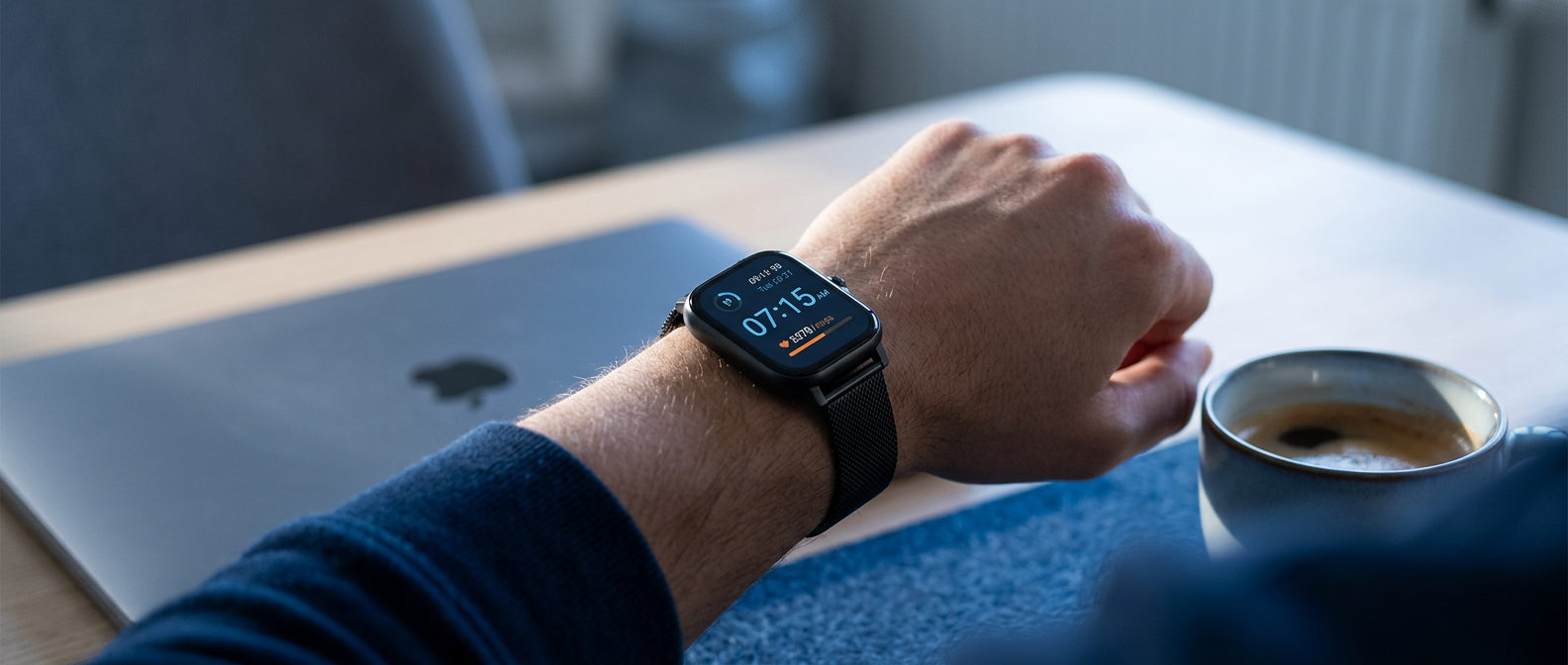
Smartwatches all start to look alike once you've scrolled past the tenth listing of square screens and silicone straps. The price gap between them, though, can be huge, and it rarely matches how useful the watch is day to day. Most people only use a handful of features. If you know which ones those are for you, you can skip the upsell and get a watch you'll actually keep wearing.
Below are the seven questions we ask before recommending a wearable, plus the watches from our own range that answer each one best.
1. Start with your day, not the spec sheet
Before comparing sensors, picture an ordinary Tuesday. Where is your phone? Are you at a desk, on a job site, at the gym, or chasing kids? The answer narrows things down fast:
- Desk and commute: prioritise calling, notifications and a screen you can read at a glance.
- Gym, runs and outdoors: prioritise water resistance, a tough case and accurate workout modes.
- Sleep and recovery: prioritise comfort and battery, because you'll wear it 24/7.
2. Bluetooth calling vs. notifications only
Every watch we sell mirrors your phone's notifications. Bluetooth calling goes a step further: the watch has its own mic and speaker, so you can answer a call while the phone stays in your bag or on the charger. If you drive, cook or carry things a lot, it's the feature you'll miss most once you've had it.
What to check: a clear speaker, a contacts or dial-pad screen, and a phone app that pairs without fuss on both iOS and Android.

Answer calls from your wrist and track your steps and heart rate between meetings.
R 646.03 R 1,292.07 -50%
3. Water resistance: what the ratings really mean
"Waterproof" on a listing can mean anything from surviving a rain shower to swimming laps. Look for the actual rating:
- IP67: handwashing, rain and the odd splash. Fine for everyday wear.
- IP68: brief submersion, so showering and a casual pool day are OK.
- 5ATM and up: made for swimming. Still avoid hot tubs and saunas, because heat is what wears down the seals.
If you train hard or work outdoors, pair a good rating with a rugged, raised bezel. It protects the screen from the knocks a slim fashion watch won't survive.


A tough, sporty case with Bluetooth calling and full fitness tracking built in.
R 698.42 R 1,396.84 -50%
4. Health tracking: the sensors worth having
Step counting is standard. The real differences are in the optical sensors on the back of the case. Here's what's worth paying for:
- Continuous heart rate: the base for calorie estimates, workout zones and resting-rate trends.
- Blood oxygen (SpO2): useful for spotting patterns during sleep and at altitude.
- Sleep stages: light, deep and REM breakdowns that help you work out why you wake up tired.
- Sport modes: walking, running, cycling and more, so each workout is logged correctly.
One honest note: consumer wearables are wellness tools, not medical devices. Use them to spot trends over weeks, and talk to a doctor about anything that worries you.
5. Battery life and charging
A watch that needs charging every night quietly stops getting worn. For most people, five to seven days of typical use is the sweet spot. Calling, an always-on display and continuous SpO2 all drain the battery faster, so check the realistic figure, not the "standby" number.
Magnetic charging cables are the norm and snap on easily. Pack the cable for trips, because they're rarely interchangeable between brands.

All the everyday health and fitness basics at an entry-level price. A great first smartwatch.
R 547.08 R 1,094.17 -50%
6. Choosing a smartwatch for kids
Kids' watches have different priorities: a tough, waterproof case, a bright, simple interface, and features that keep them moving without hooking them on a second screen. Look for activity goals, a friendly design they'll want to wear, and a soft strap that fits a smaller wrist.

Waterproof, colourful and built for playgrounds, with fitness tracking that makes moving fun.
R 516.69 R 1,033.39 -50%
7. Would a smart ring suit you better?
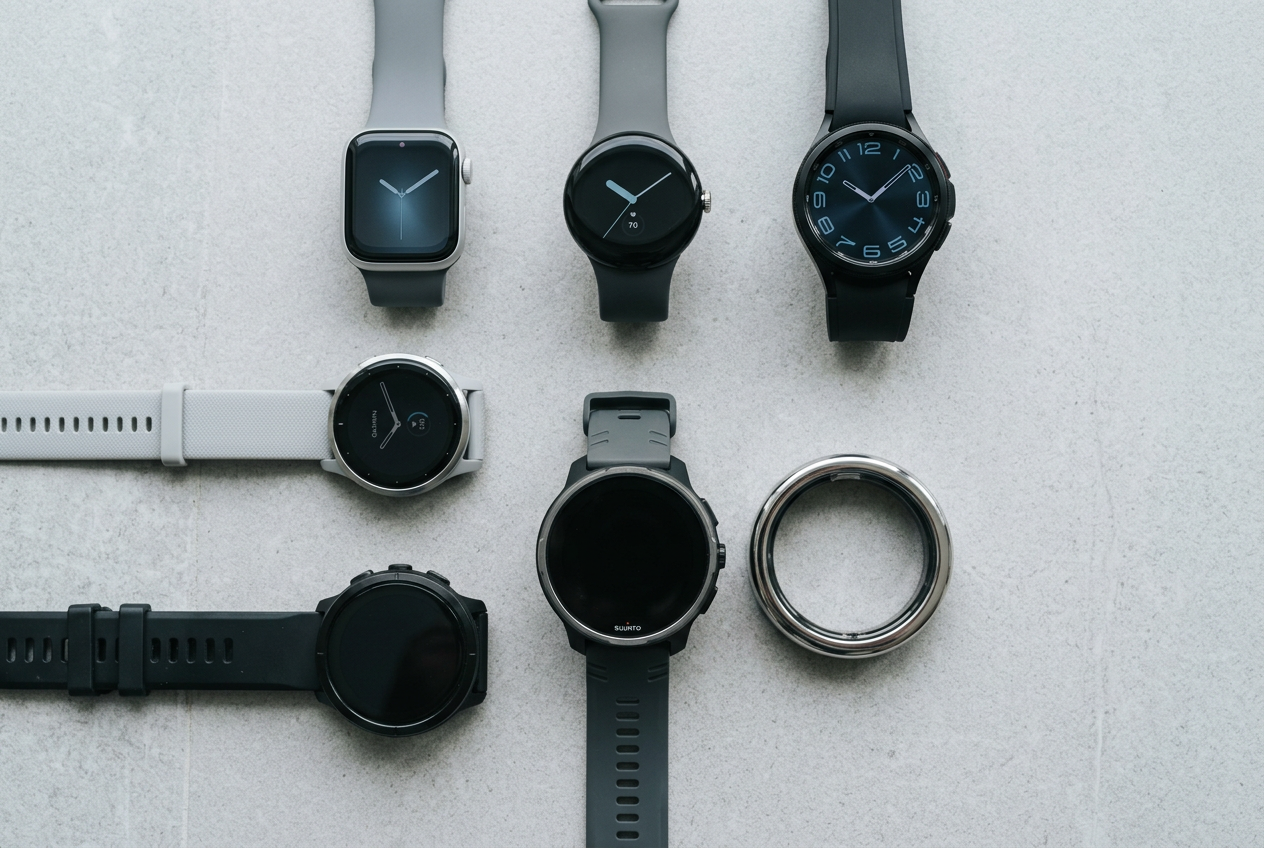
If you mainly care about sleep, recovery and heart rate, and you'd rather not have a screen buzzing on your wrist, a smart ring is worth a look. It's lighter, comfortable overnight, and goes with a regular watch or none at all. The trade-off: no screen, no calls, and everything is read in the companion app.
Our quick picks
Short on time? Find your priority and go.
| If you want… | Get | Price with code |
|---|---|---|
| Calls from your wrist | Bluetooth Calling Smart Watch | R 646.03 |
| Tough and waterproof | Waterproof Smart Watch with Bluetooth Calls & Fitness Tracking | R 698.42 |
| All-round health tracking | Smart Watch for Men Women with Health Tracking | R 704.24 |
| Lowest price | D13 Smart Watch with Health & Fitness Tracking | R 547.08 |
| A watch for kids | Waterproof Kids Smart Watch | R 516.69 |
| Screen-free tracking | Smart Ring Fitness Tracker - Stainless Steel Health Monitor | R 931.24 |
Frequently asked questions
Do these watches work with iPhone and Android?
Yes. They pair over Bluetooth with a free companion app for both iOS and Android. Check each product page for the exact app and minimum OS version.
Can I swim with a waterproof smartwatch?
That depends on the rating. IP67/IP68 covers rain, handwashing and short dips; swimming needs 5ATM or higher. Avoid hot water and saunas on all of them.
Does Bluetooth calling need a SIM card?
No. The watch acts as a speaker and mic for your phone, so calls go through your phone's plan while it's within Bluetooth range, usually around 10 metres.
How accurate is the health tracking?
It's accurate enough to show trends in your activity, heart rate and sleep over time. These are wellness devices, not medical equipment, so they're no replacement for professional advice.


